
Triage before you catalogue
Not everything from a haul deserves a record. Deciding list, bundle, donate or bin first means your cataloguing time goes to items that will actually return it, which on forty-dollar box buys is most of the profit.
For Garage Sale Flippers
Garage sale sourcing produces volume in bursts and a pile that grows faster than it gets listed, so the discipline that matters most is deciding early what never gets catalogued at all.
THE SHAPE OF THE PROBLEM
Six sales on a Saturday morning produces two full boxes for forty dollars, and about a third of what is in them is genuinely sellable. The rest is bought on momentum, hauled home, stacked in the garage, and quietly becomes the reason there is no room to work. Almost every flipper who stalls stalls here, on the backlog rather than on sourcing or on listing.
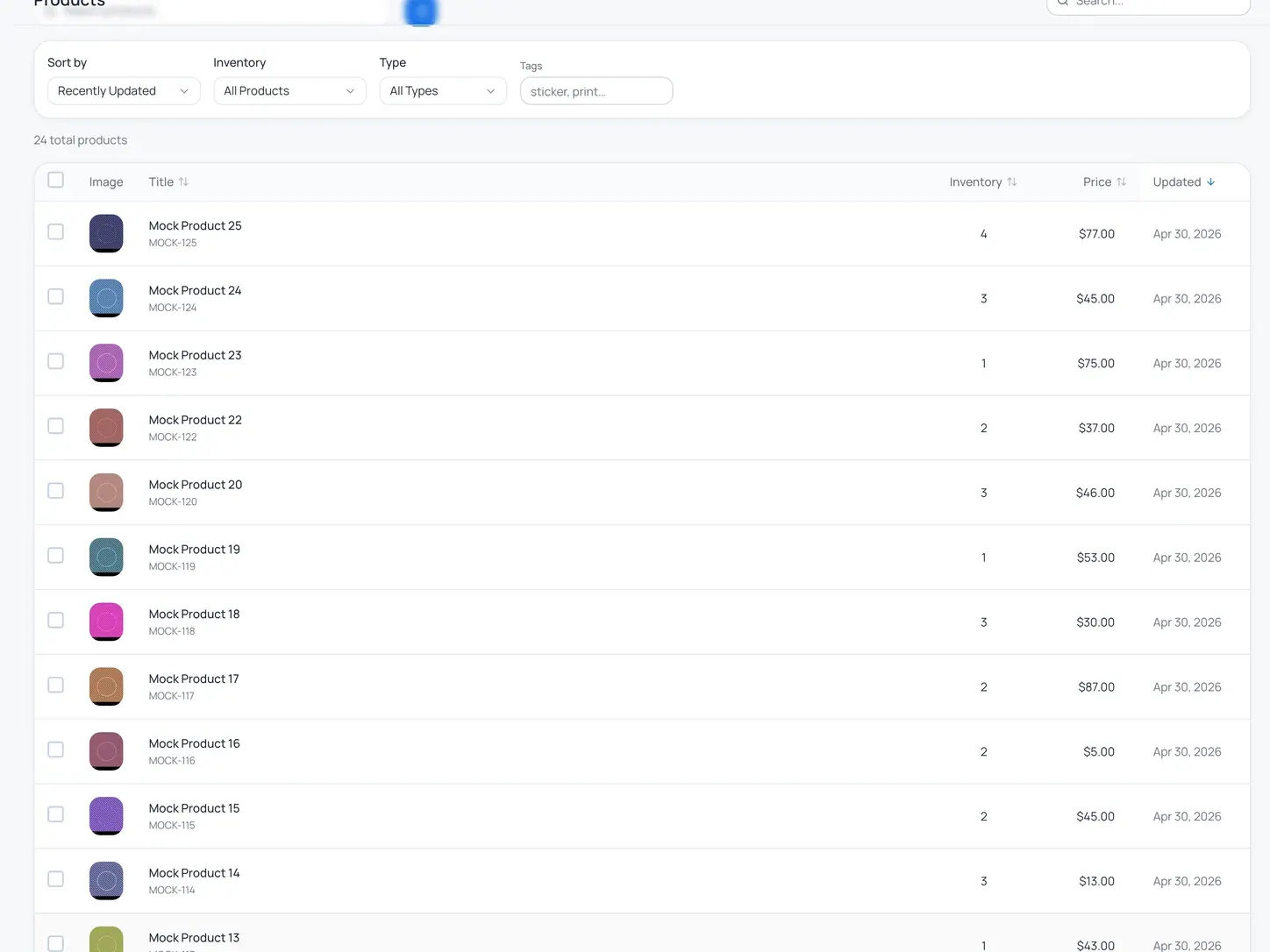
Instica helps by making the backlog countable. Records carry an intake date, so the box you sourced in April is visibly still unlisted in July. That is uncomfortable in exactly the useful way, and it makes the triage decision — list, donate, bin — something you make deliberately instead of by avoidance.
WHAT THE RECORD HOLDS
Not everything from a haul deserves a record. Deciding list, bundle, donate or bin first means your cataloguing time goes to items that will actually return it, which on forty-dollar box buys is most of the profit.
A photo, a rough cost and a working title is enough to create the record. Titles, measurements and better photographs can come at listing time; what cannot be recovered later is what you paid.
Unlisted stock with an intake date is a countable queue rather than a vague sense of being behind. That number is the honest measure of whether last weekend’s sourcing was worth doing.
THE WORKFLOW
Garage sale flipping is a few concentrated hours of buying followed by a week of processing that usually does not happen. The workflow is designed to shift work into the hours when you are already engaged.
A dollar item that sells for eight is a good trade only if it is worth the listing time and the shipping. The items that fail this test are what fill the garage.
Whole-table buys and box lots need cost spread across the pieces you keep. Doing it during the unpack — while you still know which sale each item came from — is the only time it is easy.
Sort into list, bundle, donate and bin before anything goes on a shelf. Items that reach a shelf undecided tend to stay undecided, and the shelf is the constraint.
Listing the newest and most exciting finds first is the natural instinct and the reason old stock never moves. Sorting the backlog by intake date corrects for it.
CHANNEL BY CHANNEL
Instica connects to eBay, Shopify and Discogs. For a flipper working from mixed household stock, that means one primary channel and two situational ones.
WHERE IT GOES WRONG
A dollar spent on something that will never be listed is a dollar plus the space it occupies plus the trip to dispose of it. Cheap is not the same as profitable, and the gap between them is what the backlog is made of.
Each unprocessed haul makes the next one harder to face, and eventually sourcing stops because processing has become unmanageable. A visible backlog count catches this earlier than a full garage does.
Multiple sales in a morning, all cash, all mixed together. Without splitting cost at unpack, every profit figure for that weekend is invented, and invented numbers tend to flatter the weekend.
FREQUENTLY ASKED
No. Catalogue what you intend to list. Items destined for a bundle, a donation or the bin should be triaged out before they consume record-keeping time, because on low-cost hauls that time is the main expense.
Distribute it across the items you keep, weighted toward the ones carrying the value, at the moment you unpack. Items you triage out can take a nominal share so the arithmetic still balances.
For a first weekend, usually. If you are sourcing every week the backlog outgrows it quickly, and Operator at $19 a month with 500 listings across all channels is the tier that matches a regular route.
From the reselling course
Saturday sourcing produces in bursts and listing does not, which is why the pile exists. These six guides are about deciding faster at the kerb and clearing faster at home.
Most of what ends up in the pile should have been left on the driveway. This is how to tell.
One processing session per haul beats a fortnight of evenings. The mechanics of that.
Testing, cleaning and photographing a mixed lot in a single pass.
A pile becomes inventory the moment every thing in it has a name and a place.
Cheap sourcing hides how much money is asleep in the garage.
When to accept that something bought for a dollar is worth less than the shelf it occupies.
All free to read — start anywhere in the course. Or find the real bottleneck with the three-minute reseller diagnostic.
Free for 25 items · No card · Cancel from your account page.